
Blog
A TPE Supplier for Flexible Parts That Need More Than a Soft Feel


A sample feels comfortably soft in the hand, but the finished grip still feels wrong on the product. The material may be only part of the difference: shape, thickness, texture and the way the component is supported also belong in the decision. For a buyer choosing a TPE supplier, MIRACLE offers a flexible-material portfolio including TPE, TPV, SBS-based TPE and TPU. Start with the actual component, its manufacturing route and what the user needs it to do, then discuss a hardness target and the other relevant performance requirements.
Our manufacturing and in-house development support a material conversation that goes beyond selecting a soft-looking pellet. MIRACLE’s published application discussion includes grips, fitness-related products, flexible consumer goods and automotive or other component needs. These are starting points for a grade-specific review, not a claim that one flexible material suits all those jobs.
Tell the TPE supplier how the grip is used, not just how soft it should be
A grip’s material brief should describe the hand contact and the way the part works in the product. Is the component squeezed, held continuously, flexed during use or fitted around another part? Explain the intended interaction before asking MIRACLE to propose a material. A general request for a soft TPE can conceal quite different design priorities.
Include the relevant contact situation too: whether the user handles the component directly or with gloves, and which conditions the product specification expects it to encounter. These are inputs for evaluating the grip, not a reason to claim slip resistance from an informal touch test. MIRACLE’s material discussion becomes more focused when the buyer explains the real interaction rather than only request a rubber-like feel.
Consider a fitness-product buyer reviewing a detachable flexible grip. A thick loose sample may feel appealing, while the actual grip has a thinner section and a different surface. The sample remains useful as a reference for the desired feel, but it does not settle the finished component’s acceptance. Provide the design and identify which contact area matters to the user.
A buyer of an automotive flexible component may have a different priority, such as defined movement or another required mechanical behavior. MIRACLE’s portfolio can support that discussion too, but the request should describe the actual operating demand. Do not carry a consumer grip’s material decision into another component simply because both are called flexible.
A TPE hardness value needs a scale and a meaningful comparison
Hardness is one useful material characteristic, not a complete description of the part. Avient’s hardness bulletin defines it in terms of resistance to indentation and distinguishes it from bending-related properties. That general explanation helps buyers ask a more precise question. Give MIRACLE the hardness scale and relevant assessment information with any numerical target, rather than an unexplained value.
If the customer supplies an existing material reference, identify what the reference represents. A reported material hardness and a user’s impression of a finished grip are different kinds of evidence. Both can be useful, but purchasing should not merge them into a promise that matching one value will reproduce every aspect of the old part’s feel.
For comparisons between reported hardness values, establish the relevant specimen and method information, including how the reading was taken. Do not assume two bare numbers describe identical assessments. The engineer and MIRACLE should agree what comparison is meaningful for the selected material. That preserves the value of the hardness target while keeping it distinct from the user evaluation of a shaped grip.
MIRACLE’s material evaluation approach explicitly treats hardness, tensile response and other characteristics as different performance questions. That is a useful basis for development: retain the hardness target where relevant, then identify what else the flexible component must demonstrate in its actual form.
Grip thickness and the supporting part can change the feel being judged
Tell the supplier whether the flexible component is a standalone part or is supported by another construction. The actual section matters to the user’s experience. Avient’s discussion of apparent hardness explains how a thinner elastomer layer over a substrate can feel harder without the underlying material having changed into a different grade.
For the MIRACLE project, provide the relevant drawing or physical part and describe the intended construction. Do not infer bonding or overmolding suitability from that general relationship. The selected material, joining route and substrate requirements need their own review. A soft sample that feels right does not establish adhesion to a different component.
If a proposed design changes the thickness after the first sample review, keep that change visible. The buyer can retain the original feel reference as context while deciding what the revised component must achieve. This is more informative than asking for a softer material without explaining that the actual contact section has changed.
The surface reference matters as well. A smooth trial piece can help describe a material direction while the product uses a textured contact face. Identify that difference in the sample review. The useful development target is the required feel in the intended design, not a guarantee that every shape and finish made from the same compound will give the same impression.
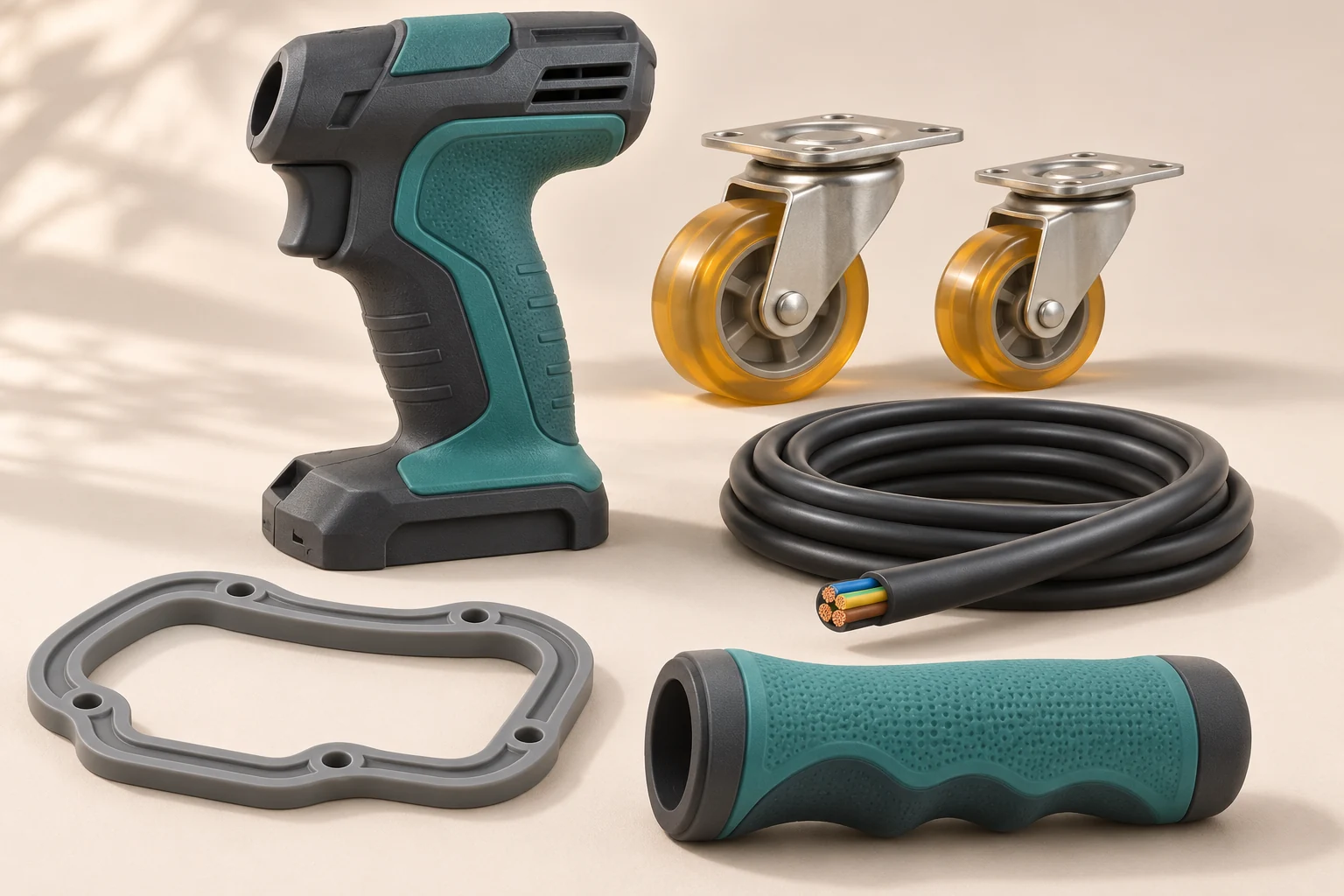
Use MIRACLE’s TPE, TPV, SBS-based and TPU routes as distinct starting points
TPE is a broad term for thermoplastic elastomer materials. MIRACLE’s listed names should not be read as four interchangeable grades, or as four unrelated material categories with identical properties. A useful discussion identifies the family and selected material behind the commercial description, then evaluates it for the application.
Our flexible range lets the buyer bring either a defined material route or an open component request. If an existing drawing specifies a family, include that information. If the family is still undecided, explain the part’s required behavior instead of choosing a name because its sample looks similar to the old material.
- TPE request: describe the part, desired feel, hardness target where known and manufacturing route so the broad label becomes a concrete development brief.
- TPV request: identify why this route appears in the specification and which component behavior or requirement must be assessed; do not treat the name as the complete approval.
- SBS-based TPE request: preserve the stated material basis and application conditions when discussing a candidate, rather than substitute a different flexible material solely by feel.
- TPU request: identify the thermoplastic polyurethane material requirement and intended process separately from a general soft-part description.
A familiar elastomer name does not define the grip’s selected grade
A purchasing office may receive the instruction “use TPE” from one team and “same as the old grip” from another. Neither tells MIRACLE the actual material requirement completely. Bring the existing reference and the intended new component into the same discussion, and identify which features or properties the buyer wants to preserve.
If an old component’s grade information is unavailable, state that openly in the development exchange. Its feel and appearance can still help explain the target, but they do not reveal its complete composition or establish a direct replacement. A new candidate should be selected and evaluated for the actual requirement rather than described as equivalent without evidence.
Separate flexible feel from the movement the TPE component must withstand
MIRACLE’s application brief asks how the part should feel, perform and be manufactured. Those questions complement one another. A grip may need a particular contact experience, while another flexible component may need a defined movement or mechanical response. The relevant acceptance should describe that job rather than rely on a softness impression alone.
For example, a consumer-product team may like a flexible sample’s touch but find the proposed component difficult to fit or use in the intended assembly. Describe that actual problem. The development discussion needs to distinguish a material preference from the construction’s functional requirement before deciding whether a material revision is appropriate.
A part fitted once and a part flexed repeatedly can also lead to different evaluation priorities. Explain which operation belongs to the actual component and what the relevant acceptance requires. A pleasing first bend does not establish the result of a separate repeated-use assessment. Give the development team the intended job so the proposed material is not selected solely around the easiest demonstration.
Likewise, a component that bends easily is not automatically suitable for every repeated movement, load or environment. Identify the required assessment and conditions with the responsible technical parties. MIRACLE’s general portfolio does not replace the selected grade information or the buyer’s application evaluation.
Hardness equipment supports a material discussion, not a complete grip approval
Our published quality materials show hardness evaluation equipment as part of the working environment. The useful next question is which sample and method are relevant to the proposed material. A hardness reading should remain connected to its preparation and assessment conditions, especially when it is compared with the user’s impression of a shaped part.
A customer can accept a hardness direction while still needing to examine the grip’s actual contact, fit or movement. Keep those decisions distinguishable. This lets purchasing advance the material project without claiming that one measurement has settled every performance requirement of the finished component.

Work with MIRACLE on the flexible part rather than an isolated pellet choice
Our in-house development can begin with drawings, a physical reference, photos or existing material information, together with the intended process and requirements. Those inputs give the team a useful way to discuss candidate materials. The MIRACLE manufacturing business combines material supply with a development conversation, rather than limiting the buyer to a pellet-color comparison.
The production approach includes incoming checks, initial inspection, interval sampling and self and peer cross-checks. For the TPE project, connect the selected material to the component trial being considered. If the buyer accepts the grip made from that candidate, the production order should preserve the material identity that the acceptance actually concerns.
If the project also contains a rigid colored component, keep its material role separate. Our molded-product material discussion explains why a color concentrate and a complete flexible-material request are different jobs. They can be coordinated within one program without becoming the same manufacturing instruction.
Keep the grip requirement recognizable when the TPE granules arrive
For a hand-contact grip, describe the intended contact conditions and destination-market document requirements with the selected material request. A comfortable touch observation cannot establish contact suitability or a regulated-use approval. If the same product program contains a flexible detail with a different contact situation, keep that requirement separate rather than attach the grip’s documents to both parts automatically.
A shipment for that program may contain the grip candidate and a different flexible material. Agree how the accepted grip material will be identified for the receiver and processor. MIRACLE coordinates packing and shipping around the actual order, including the confirmed quantity and arrangement. The buyer should be able to connect the received granules to the grip trial, not simply find a bag that looks like the translucent sample in a photograph.
A repeat order also deserves a focused check when the grip design, process or operating requirement changes. Keep the accepted material reference as useful evidence, while identifying the new part of the decision. That preserves the value of development instead of treating an old sample as permission to make a different component without review.
For a grip project, judge the material where the user will meet it: in the actual contact section and supported construction, with the required fit and function still present. The loose sample can point MIRACLE’s development team toward the desired feel. The finished component is where the buyer decides whether that direction has become the right material for the product.