
How a White Masterbatch Manufacturer Separates Loading from Performance

A larger TiO₂ percentage describes a more highly loaded white concentrate; it does not automatically describe a better finished product. A white masterbatch manufacturer needs to connect composition with the resin, addition basis, appearance target and processing application. MIRACLE’s white PE/PP family spans a published 20%–80% TiO₂ range, giving buyers a meaningful starting choice without turning one percentage into a universal material recommendation.
For a converter comparing offers, the useful question is which selected proposal can be evaluated against the real article. MIRACLE combines masterbatch production with in-house development and pilot-scale sample evaluation. That manufacturing background supports a discussion about the material’s role in the product, rather than a quotation comparison based only on the largest concentration printed in a table.
A white masterbatch manufacturer should distinguish three different percentages
Purchasing conversations can mix up the pigment content of a concentrate, the amount of concentrate introduced into the customer’s resin and the pigment content calculated for the resulting mixture. These are related quantities, but they are not interchangeable. A buyer should establish which one a technical or commercial statement is describing before using it to compare materials.
MIRACLE’s white masterbatch range describes the first of those quantities: 20%–80% TiO₂ across different requirements. It does not supply the missing application-specific addition level. That needs to be discussed for the selected proposal and evaluated in the intended PE or PP article.
TiO₂ content in the concentrate describes the proposed white material
The concentration tells the buyer something about the supplied masterbatch, not everything about how it will behave after dilution. Keep it connected to the actual material reference. The family-wide range is useful for understanding the portfolio, while a particular order needs the selected proposal and relevant current technical information.
A higher stated loading should not be interpreted as proof that dispersion, carrier suitability and finished appearance are already acceptable for the buyer’s job. The manufacturer and converter need a relevant evaluation basis. White tone and hiding remain product questions, even when the concentrate composition is known.
White masterbatch addition describes the mixture prepared by the converter
An addition level should identify its basis. If it is stated as a percentage of the final mixture, that is different from an amount added per unit mass of base resin. Keep the actual quantities and convention visible in the trial record so the formulation discussion does not inherit an unnoticed difference in mixture preparation.
The proposed addition guidance is not a free-standing promise for every resin or thickness. A film buyer and a molded-goods buyer may evaluate different products. MIRACLE’s PE/PP family provides the relevant starting route, but the actual processing and appearance requirements still need to be established for each selected material.
Calculated TiO₂ in the final mixture is a mass balance, not a performance result
When the two input percentages are known on compatible mass bases, the pigment contribution can be calculated. That arithmetic is useful for understanding an offer, but it cannot demonstrate the finished article’s appearance on its own. Two mixtures with the same calculated pigment fraction are not automatically equivalent formulations.
Keep the approved product reference beside the calculation. The converter’s actual resin, film form or molded geometry, and the agreed viewing basis remain part of deciding whether a white material is suitable. A result in a spreadsheet should help interpret the trial, not replace the trial’s product-specific purpose.

Compare hypothetical white formulations without treating them as MIRACLE grades
The following example uses deliberately simplified concentrates to explain the quantities. It is not a list of MIRACLE grades, a recipe, a dosage recommendation or a claim about measured opacity. Both examples assume only pigment and carrier for the purpose of the arithmetic; actual formulations can contain other components.
| Illustrative input or result | Concentrate A | Concentrate B |
|---|---|---|
| TiO₂ within the hypothetical concentrate | 50% | 80% |
| Concentrate in the final mixture | 4% | 2.5% |
| Calculated TiO₂ in the final mixture | 2% | 2% |
| Calculated carrier contribution under the simplified assumption | 2% | 0.5% |
| Appearance approval established by the arithmetic? | No | No |
The matching 2% pigment result does not show that the two concentrates would create identical hiding, tone or processing behavior. It shows that composition and addition are different parts of the material decision. The carrier contribution also differs in this simplified example, reinforcing why a concentrate should not be treated as pigment that introduces nothing else.
Keep the denominator visible: a percentage of the final mixture is not the same quantity as that percentage added on top of the base resin.
In the hypothetical A example, 4% of a 100 kg final mixture means 4 kg of concentrate with 96 kg of resin. If an operator instead adds 4 kg of concentrate to 100 kg of resin, the total becomes 104 kg and the concentrate fraction is approximately 3.846%. With the example’s assumed 50% TiO₂ content, the calculated pigment fraction is then approximately 1.923%, not the 2% shown for the original mixture.
For hypothetical B, 2.5 kg of concentrate plus 97.5 kg of resin represents the stated 2.5% final-mixture addition. Adding those 2.5 kg on top of 100 kg of resin changes the total to 102.5 kg. The calculated concentrate fraction becomes approximately 2.439%, and the assumed 80% pigment content gives approximately 1.951% pigment in that different mixture. These remain arithmetic examples, not proposed MIRACLE trial settings.
The practical white-material lesson is not that every small numerical difference creates an unacceptable article. That would require application evidence. It is that the manufacturer and converter should describe the same mixture before trying to interpret a white appearance difference or compare costs. Record the actual quantities used in the accepted sample so the later production discussion does not begin with an ambiguous percentage.
For a MIRACLE enquiry, request the selected proposal around the actual PE or PP application. Use the published white-family range to understand the offering, then review the relevant guidance and evaluate the product. The purpose is to select an appropriate material, not to reverse-engineer an unknown formulation from one percentage in a quotation.
White material cost depends on an accepted application, not the bag price alone
If two proposals have actually met the relevant product requirements, a buyer can compare their material-cost contribution using the agreed addition levels and actual quotations. A cheaper kilogram of concentrate is not necessarily a cheaper final mixture when different quantities are needed. Equally, a lower addition level does not automatically mean a lower finished material cost.
For a simple resin-and-concentrate mixture, calculate the base-resin contribution as well as the concentrate contribution. If d is the concentrate fraction of total mixture mass, the expression is (1−d) multiplied by resin price plus d multiplied by concentrate price. Other production costs and losses are outside that limited material-cost expression.
To illustrate only, assume a resin price of 1.00 monetary unit per kilogram and concentrate prices of 2.00 and 2.80 for the hypothetical A and B mixtures above. The calculated mixture costs would be 1.04 and 1.045 respectively. These invented round figures explain the calculation; they are not MIRACLE quotes, current market prices or evidence of equivalent product performance.
The correct purchase cannot be decided by that arithmetic unless the candidate materials are relevant and accepted for the same finished-product requirement. A white film that fails the agreed hiding objective is not an equivalent offer merely because a cost expression looks attractive. The evaluation basis must remain attached to the commercial comparison.
Match white tone and hiding to the PE or PP article
A white molded household item and a thin package can bring different appearance questions to MIRACLE’s material team. The first may need a defined tone on a particular surface. The second may require a certain hiding impression in its intended film form. Identify the actual question rather than requesting the strongest white and expecting the manufacturer to infer the rest.
For a molded PP article, retain the relevant geometry and visible finish. If the product contains textured and smoother areas, explain which comparisons matter. A smooth reference can communicate a useful direction without establishing an unconditional approval for every visible area of the production component.
For a PE film, retain the intended thickness context and the background that matters to the appearance. A sample judged in a folded or thicker form should not silently become the approval for a different product. Changes in the film design should be communicated before the next result is treated as a direct repeat of the original trial.
Colloids’ white-masterbatch overview provides industry context for considering carrier-based options and opacity requirements. Its product approvals, stock statements and customization promises belong to that supplier and should not be used as facts about MIRACLE.
Use MIRACLE’s connected portfolio without merging different material claims
MIRACLE’s custom color range and black masterbatch family allow a converter to discuss other appearance programs with the same manufacturer. Keep each selected material and product requirement distinct. A broader supplier relationship is useful when it clarifies the range, not when it encourages one approval to cover unrelated applications.
Where the white article needs another function, MIRACLE’s functional categories include anti-aging, UV, PPA, antistatic and antiblocking. Specify the desired outcome and confirm what the proposed grade covers. The product family’s existence does not prove that every function has been combined with every white concentrate.
MIRACLE also offers PET-based and nonwoven families. Do not transfer the PE/PP white concentration range to a PET or fabric specification without a confirmed material proposal. Carrier system and production context remain part of selecting the route, even when a buyer’s purchasing system places every white material under a common color heading.
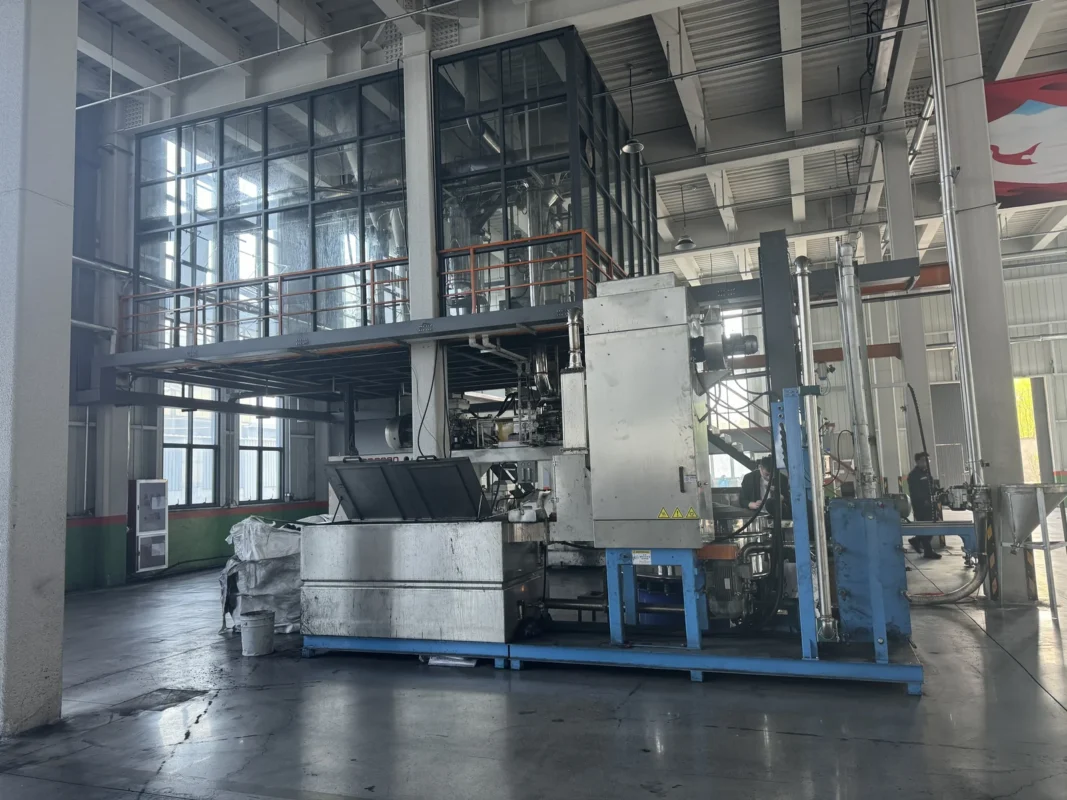
Keep the manufacturer’s production checks connected to the accepted white proposal
MIRACLE describes attention to incoming materials, control of processing conditions, initial examination and sampling during manufacture. Its in-house development and pilot-scale evaluation connect material discussions with practical preparation work. These are concrete reasons to include the actual application in the enquiry rather than treating the manufacturer as a source of interchangeable white pellets.
The accepted material reference should carry into the order, together with relevant current documents and any confirmed evaluation requirements. The buyer should be able to identify which proposal was selected and what the approved sample represents. A family-wide concentration range cannot perform that identification task on its own.
Packaging requirements can be discussed around bag format, pack size, labels and pallets. For a factory stocking more than one white material, agree identification that preserves their selected references. Similar appearance in the stockroom should not erase differences in the applications or conditions for which the materials were evaluated.
Choose the white concentration as part of a complete material decision
For a buyer comparing white offers, MIRACLE’s 20%–80% TiO₂ portfolio provides useful scope and its development capability provides a route into application review. The opportunity is to connect those resources with a defined PE or PP product, not to declare one percentage the winner before the product has been evaluated.
The distinction between white tone and opacity helps define the appearance objective. The discussion of white trials for PP household goods considers a more specific component application.
Keep composition, addition, observed product performance and commercial cost in their proper places. When they point to the same selected material and the same intended article, purchasing has a stronger reason for its decision than either the largest TiO₂ number or the lowest quoted price viewed alone.