
When a Custom Color Concentrate Manufacturer Is the Better Sourcing Route

Changing a color-material source does not require pretending that the buyer owns the previous supplier’s formulation. A custom color concentrate manufacturer can be approached with the finished-product requirement, actual resin and an appropriate reference instead. MIRACLE offers customizable PE/PP colors, a dedicated PET carrier family and in-house development supported by pilot-scale evaluation. That creates a practical route for discussing a new material proposal without promising to reproduce an unknown proprietary recipe.
The first decision is what the new material must demonstrate in the customer’s product. Keep the desired appearance separate from an assumption that the former formulation must be chemically identical. A direct manufacturing relationship is useful when it connects the reference with a relevant proposal and a clear evaluation basis.
Give the custom color concentrate manufacturer a requirement, not an unverified recipe
A buyer transferring a program may have a finished part, retained film, fabric reference or old commercial material description. These can provide useful context, but they do not necessarily reveal the previous formulation. Explain what each reference represents and what the new proposal is expected to achieve.
MIRACLE’s customizable color masterbatch is discussed around the target shade, finished appearance, resin and processing requirements. Bring those elements into the new-source enquiry rather than describe success only as making the exact same material as another company.
A finished color reference should identify the actual customer product
If the reference is a molded part, identify its relevant surface and intended visual comparison. If it is film or fabric, retain the product form that matters to the customer. A sample can communicate an appearance direction without being a complete specification of every processing and end-use requirement.
Keep the reference identity clear through the exchange. If the buyer has several historical samples, identify which one governs the current product. The new manufacturer should not be asked to reconcile conflicting targets without knowing which requirement the customer actually wants to repeat.
Consider a purchasing team holding an older approved part and a newer shipment that the customer found too dull. Sending both without explanation creates two possible targets. Mark the approved part as the appearance reference and the newer shipment as evidence of the unwanted direction. The development conversation can then focus on restoring the intended result, rather than averaging two samples that serve different purposes.
That distinction also makes MIRACLE’s sample-development capability more useful. The team can review a defined color objective alongside the resin and finished form. The buyer retains control of the acceptance decision, while the manufacturer contributes a proposed material route instead of being asked to guess which historical shipment was successful.
The production resin should remain visible during the source transfer
State the actual resin used by the customer and any known change since the earlier product was made. A familiar color name does not establish that the base material and process remain unchanged. The selected MIRACLE proposal needs a relevant application basis rather than an assumption inherited from a past purchasing description.
If the production resin is also under review, identify that open decision. A sample intended to explore a direction is not the same as a material released for the eventual production system. The manufacturer can discuss the proposed route more usefully when the actual development status is clear.
Choose the correct custom-color masterbatch route for the transferred product
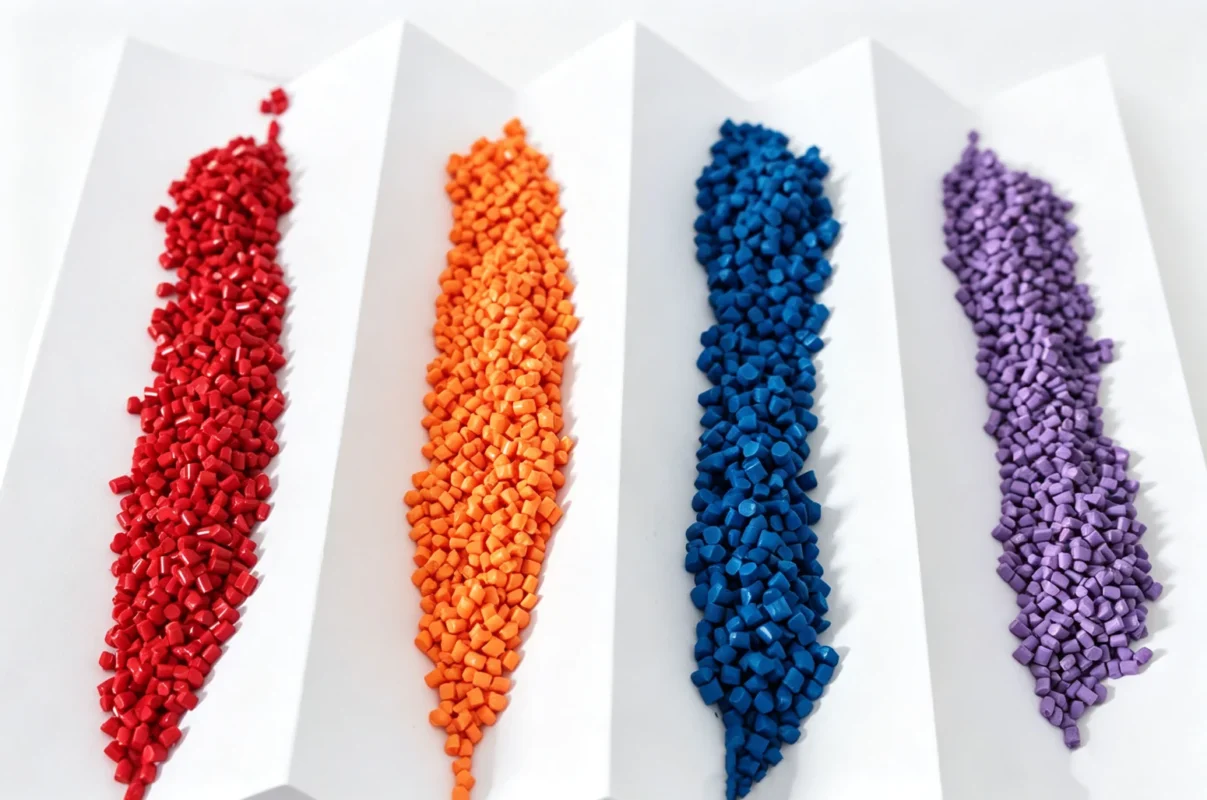
MIRACLE’s PE/PP and PET-based families provide different starting points. A source transfer should preserve the actual polymer rather than carry a familiar commercial color into an unconfirmed carrier route. The buyer can retain one visual intention while the manufacturer reviews a relevant proposal for the actual product.
A PET transfer should keep its dedicated carrier and optical objective
The PET masterbatch family is discussed around custom colors for glossy products, with transparency or opacity and processing context retained. Do not treat an old polyolefin color sample as proof of PET suitability merely because the target hue is similar.
If the appearance brief has changed, say so. A product revised from see-through color toward hiding is not an unchanged transfer requirement. The new manufacturer should understand which parts of the old reference remain useful and which aspects of the actual product are being reconsidered.
For neutral colors, MIRACLE’s black family and white PE/PP range provide distinct appearance discussions. Their published concentration ranges describe the offering, not a guarantee that a new proposal with a similar number is equivalent to another supplier’s formulation.
| Transferred appearance program | Relevant MIRACLE offering | Question the old reference does not answer alone |
|---|---|---|
| A black PE or PP article | The black series spans 18–50% carbon black content. | Which selected proposal produces the required appearance in the buyer’s resin and article? |
| A white PE or PP article | The white series lists 20–80% TiO2 content. | Does the customer need the same white tone, hiding effect, or both in the actual product? |
| A colored PET product | The dedicated PET carrier family supports custom-color discussions. | Should the transferred article retain transparency, or is the design moving toward opacity? |
| A colored nonwoven reference | The nonwoven family addresses coloration for fiber-processing applications. | Which fabric construction and finished appearance should the new material be evaluated against? |
The percentages above describe concentrate composition ranges on MIRACLE’s offering, not recommended addition rates. A source transfer should not copy an old dosing instruction onto a newly selected concentrate without discussing that material’s actual application. Keep the proposed grade, intended addition basis and trial product together when the manufacturer reviews the next sample.
This family-based approach is particularly useful when one purchasing team transfers several products together. The black PP part and the transparent PET article can share a sourcing discussion without being forced into one material specification.
Use the new-source trial to establish a proposed material, not prove an assumption
MIRACLE’s in-house development and pilot-scale processing provide a practical route into sample evaluation. The customer contributes the actual resin, product reference and relevant manufacturing conditions. The proposed material can then be considered against a defined question rather than an expectation of undisclosed chemical identity.
State whether the next sample is intended to explore the color direction or release a particular application requirement. Keep the selected material and actual preparation basis identifiable. An early attractive sample should not silently become approval for every later resin, thickness or surface change.
For industry context, Avient’s color-services overview connects design intention, color translation and sampling. The general relevance is the relationship between an appearance objective and material development; its named services and results are not MIRACLE commitments.
Compare the candidate and old reference on the product basis that matters
Keep the reference and candidate connected to their actual sample forms and known preparation conditions. A comparison between unrelated geometries or backgrounds may not answer the transfer question the buyer intends. Identify those differences before treating an observed effect as proof that the new concentrate is unsuitable.
Likewise, a similar-looking pellet is not proof that the transferred product will meet the customer’s appearance requirement. The relevant evaluation belongs in the finished article or an agreed representative sample. A direct manufacturer relationship can help make that discussion more specific without replacing the customer’s product requirements.
Separate a color difference from another material observation
If the candidate is not accepted, describe the actual effect. Tone, hiding, visible uniformity, surface relationship and component behavior are different observations. The manufacturer should not have to infer which issue is meant from a request to make the new material more like the old supplier’s product.
Keep known changes in resin or process with the feedback. A transfer trial that changes several conditions is not an unchanged repeat of the previous production system. The next development exchange should address the actual comparison rather than assume the formulation alone explains every difference.
Keep functional requirements explicit when a custom color program moves source
The former material may have been used for a reason beyond appearance. If the product needs a particular function, identify it with the actual end use and process. MIRACLE’s functional portfolio lists several categories, including anti-aging, UV, PPA, antistatic and antiblocking, for discussion.
The list does not establish that every function is already available in every transferred color proposal. Confirm what the actual selected material covers. A shade approval should not be described as a complete release for a separate requirement that has not been evaluated or documented.
Keep relevant declarations and current technical information tied to the proposed grade and application. An old document from another supplier or a broad company-level framework reference should not be represented as an approval of the new MIRACLE material.
For example, a buyer moving a colored film program might be satisfied with the candidate’s tone while still reviewing the required antiblocking behavior. Record the color result as one accepted observation, not as evidence that the second requirement has also been met. MIRACLE’s separate color and functional discussions help make the outstanding question visible rather than hide it inside a general request for an equivalent replacement.
Make a transfer decision that respects both formulation privacy and buyer evidence
A customer can define the product outcome without possessing the old manufacturer’s confidential recipe. An identified reference, actual production context and relevant acceptance requirement create a legitimate development brief. They do not require the new supplier to promise that every pigment system can be reproduced identically.
The buyer should also avoid using a historical material name as the only evidence of suitability. The new proposal needs its own selected identity and relevant evaluation. The accepted reference can preserve a visual target while the actual material decision is established through the new manufacturing relationship.
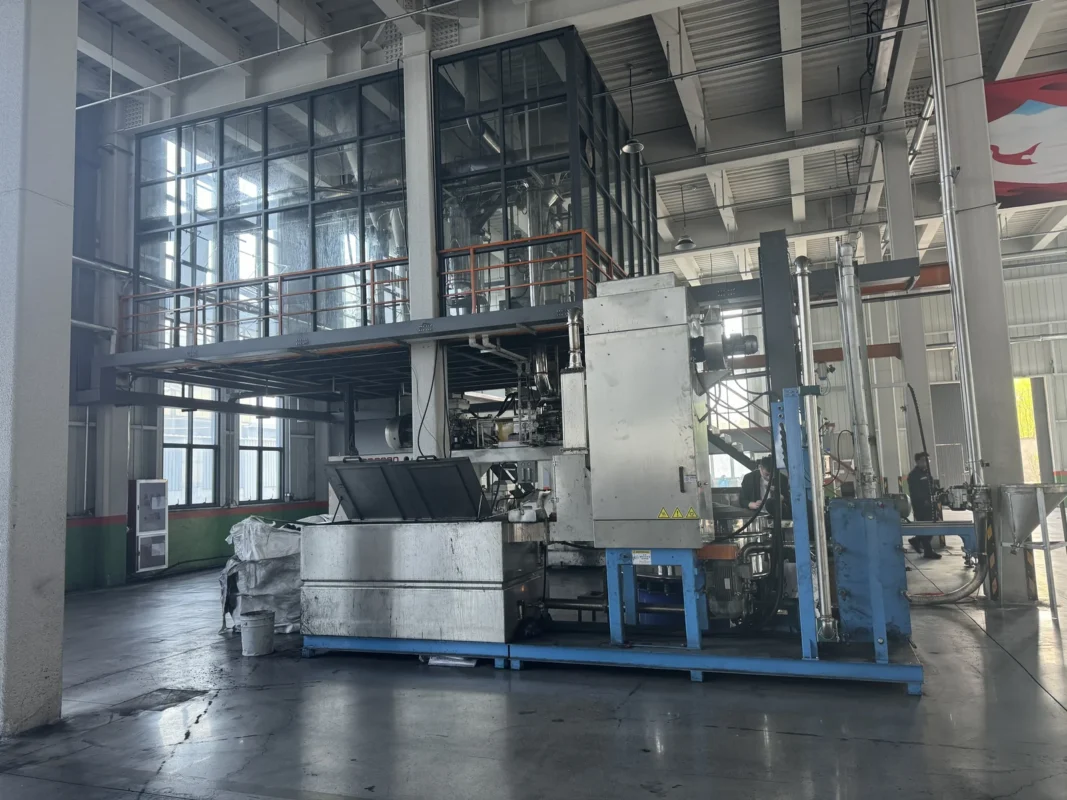
MIRACLE’s production approach describes incoming-material attention, process control, initial examination and samples during manufacture. Connect the accepted transfer proposal with those material requirements in the order, rather than request a generic replacement whose application scope remains unclear.
Keep the transferred color identifiable when the factory changes supply
If an internal stock code will continue to be used, clarify how it relates to the new manufacturer’s selected reference. A familiar color nickname should not conceal an unresolved material transition. The receiving and production teams need to know which proposal has been evaluated for the job they are running.
During a transition, the factory may still hold the former supplier’s material when the new concentrate arrives. Keep the two material identities distinguishable even if both serve one customer color program. An internal color name can remain familiar to sales, while the production instruction identifies the actual approved concentrate and its relevant processing basis. This avoids treating two sources as interchangeable solely because purchasing has retained the same stock description.
MIRACLE allows packaging discussions around bag format, pack size, labels and pallets. Use the agreed identification to support the transition without inventing a fixed pack or minimum order. The actual commercial requirements should be confirmed for the selected material and destination.
The guide to developing from a color reference follows the appearance-development process. The discussion of concentrate and other material roles helps purchasing describe what production actually expects the supplied pellets to do.
MIRACLE’s custom-color range, carrier-based options and development capability offer a practical route for a new source discussion. Bring the product outcome you need, retain the actual resin and evaluation basis, and accept a defined proposal for the job—not an unsupported promise that an unknown private formulation has simply been copied.