
Choosing a Color Masterbatch Supplier When the Finished Part Sets the Standard

The most useful color sample is the one that represents what your customer will actually see. A color masterbatch supplier should therefore review the finished article, its resin and its surface before treating a color reference as a complete requirement. MIRACLE supplies customizable PE/PP color masterbatch and supports the discussion with in-house development, production experience and application-led sample evaluation. Its range is a practical starting point for packaging converters, molded-product manufacturers and teams developing new product colors.
Begin with a physical reference or a clearly identified color target, but explain the product around it. A translucent bag, a textured household component and a glossy PET article can require different material conversations even when the purchasing request uses the same color name. The right supplier relationship helps clarify those differences instead of hiding them behind an attractive collection of pellets.
Choose a color masterbatch supplier around the appearance you must approve
A processor comparing two concentrates may initially place the pellets side by side and decide that they look close. That observation is not useless, but the concentrated material is not the finished article. The intended polymer, addition level and product form still need to be part of the evaluation before either material becomes an approved purchasing reference.
MIRACLE’s color masterbatch family is described as customizable to customer requirements. That gives a buyer room to define a specific shade and appearance rather than choose only from a generic color name. The stronger the finished-product brief, the more focused that customization conversation can become.
Suppose a brand develops a colored storage component with a textured lid and a smoother body. This is an illustrative buyer scenario, not a MIRACLE customer case. The buyer should identify which surface carries the principal visual standard and how the two components will be viewed together. Otherwise, the supplier may be asked to correct a perceived color difference without knowing that the comparison includes different surfaces.
The same issue can arise when purchasing uses a photograph as the only reference. Photographs can explain the product and show a concern, but the appearance displayed on a screen does not necessarily establish the final approval basis. Where a physical sample is relevant, agree how it will be identified and evaluated so the parties are not working from different interpretations of one image.
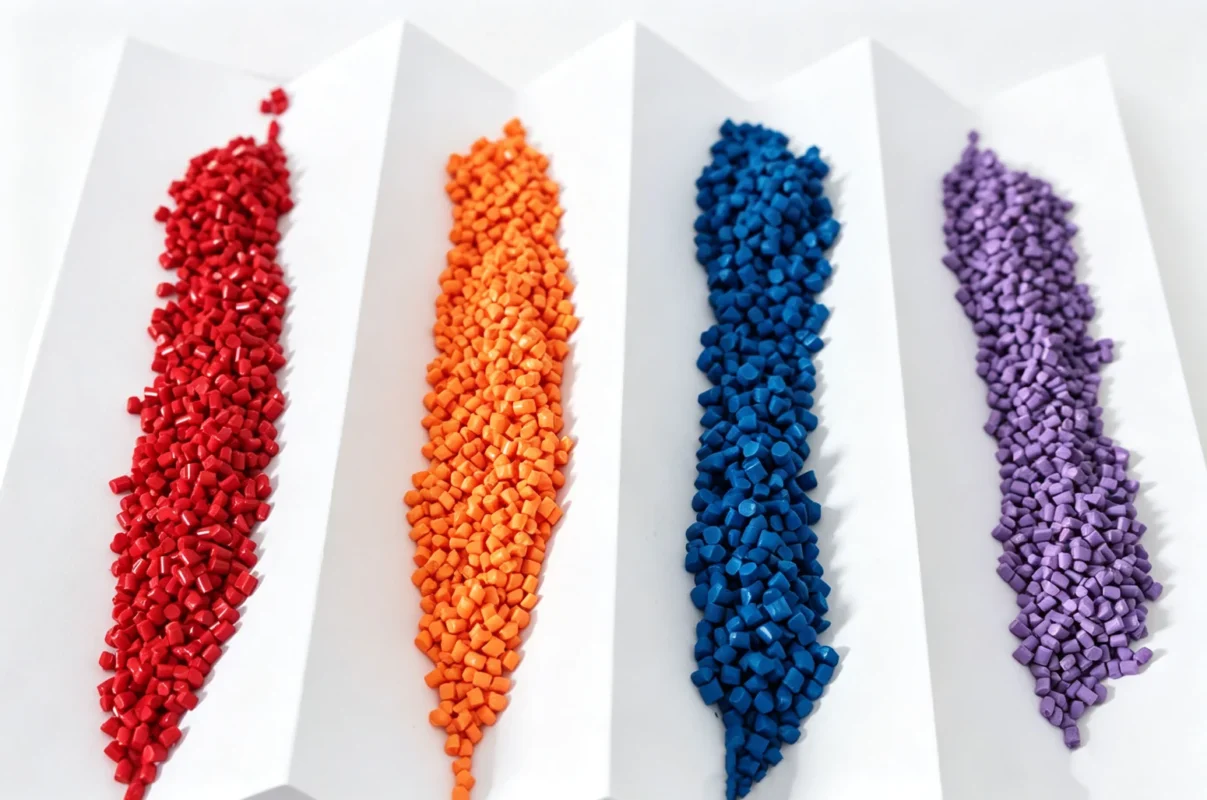
Color masterbatch selection changes when thickness and surface change
Thin-film color should be judged in the intended film
For a film converter, a color approval needs the intended film structure and thickness context. A shade assessed in a thicker sample may not answer the question posed by the thinner product that will be sold. State whether the desired result is translucent, opaque or somewhere between those descriptions, rather than assuming that a color name includes an opacity target.
MIRACLE’s PE/PP range provides the relevant starting point for many such coloring enquiries, with the actual resin and process retained in the brief. If the film program also involves a functional requirement, identify that separately. The portfolio includes functional categories, but a color sample should not silently stand in for an unconfirmed combined color-and-function formulation.
A second illustrative situation is a packaging converter reducing film thickness while trying to keep an existing appearance. The useful supplier question is what needs to be reevaluated in the changed product, not whether the old pellet still looks the same. Keep a sample of the intended film and a clear description of the appearance difference together with the material reference.
Textured PP components need more than a smooth reference plaque
A smooth sample and a textured component may present color differently. The buyer should identify the actual PP resin, the relevant surface finish and the conditions under which the article will be viewed. A supplier can use a plaque as part of the discussion without pretending that its surface automatically represents every section of the molded product.
For a component with several visible faces, describe which areas are customer-facing and which comparisons matter. This is a design and approval question as much as a color question. It is more useful to show the material team the real difference between those faces than to ask for a vaguely warmer or stronger shade without specifying the comparison.
MIRACLE’s development approach brings the product, color target, resin and manufacturing method into one conversation. That is a meaningful advantage when the apparent color issue cannot be understood from the concentrate alone. It helps the buyer present the conditions that make the finished article distinct.
PET color requires a separate carrier and optical brief
A glossy surface does not necessarily mean a transparent material, and a transparent appearance is not the same objective as strong hiding. MIRACLE’s PET masterbatch range gives polyester enquiries a dedicated carrier route. Retain the PET resin and processing conditions, then explain the intended transparency or opacity rather than inheriting a polyolefin color approval.
This also prevents a misleading purchasing comparison. A PE/PP color concentrate and a PET-based option may share a broad shade description while addressing different material systems. Their quotes should not be treated as interchangeable solely because both are supplied as colored granules. Product form, carrier and final appearance must still align.
Use black and white masterbatch when the appearance brief calls for them
Some color requests become clearer when the buyer distinguishes hue from a neutral appearance objective. MIRACLE’s separate black and white families allow those conversations to be considered alongside its broader custom-color range. Their published composition ranges provide useful context, but neither percentage range replaces an application trial.
The black masterbatch series lists 18%–50% carbon black across different applications. A buyer should connect the selected option with the desired black appearance, product form and dispersion needs. A larger concentration number alone does not settle how the finished article will look or identify the correct final addition level.
The white masterbatch series lists 20%–80% TiO₂. A white-tone request and an opacity requirement should be distinguished in the enquiry. For example, a white household part and a packaging film intended to hide its contents do not necessarily use the same visual approval, even though both purchasing descriptions include the word “white.”
These neighboring families strengthen MIRACLE’s material offering because the buyer can discuss several appearance routes with one manufacturer. The benefit is not a blanket claim that every material is suitable for every product. It is a more useful opportunity to define which family and evaluation basis fit the actual product being developed.
Agree how the supplier and the buyer will compare color
Before another sample is prepared, decide what is being compared: the supplied reference, an agreed trial article or the customer’s current product. Keep the base resin and sample preparation information beside that reference. Otherwise, an apparently small disagreement can grow into several rounds of adjustment in which the two parties are not judging the same thing.
Viewing conditions belong in that agreement. A discussion of lightness, hue or a small appearance difference is more meaningful when the reference and the candidate are assessed on a comparable basis. A numerical tolerance, if required, should identify the relevant method and conditions; it should not be invented merely to make a purchasing brief look precise.
ASTM’s practice on repeated color measurements illustrates why color comparison involves an established measurement basis and agreed tolerances. It does not prescribe a universal acceptance limit for MIRACLE materials or replace the buyer’s finished-product evaluation.
The practical point is to make feedback actionable. “Too dull under the agreed viewing conditions on the textured lid” gives a different starting point from “wrong blue.” Include the material identity and the trial context so the next discussion can address the reported effect rather than guess which part of the previous sample needs to change.

Connect color development with the manufacturer’s working process
MIRACLE combines manufacturing with in-house development, quality control and pilot-scale sample evaluation. This supports an application-led discussion: the material team can consider a product requirement in the context of preparation and manufacturing, rather than leaving the buyer with a color reference disconnected from the way the material will be used.
Its quality information describes incoming-material monitoring, initial examination and sampling during production. These are useful features of a manufacturer-backed supply relationship. The buyer should still identify which material, requested documents and acceptance basis apply to the proposed order, rather than turning a general quality statement into an unverified performance guarantee.
A well-prepared order carries forward the approved material reference and the product context used in evaluation. If a later change involves the resin, the thickness or the visible surface, explain it before treating a new production result as a direct repeat of the earlier approval. This preserves the value of the development work already completed.
The separate explanation of how a manufacturer develops from a color reference follows that formulation conversation. For a specific molded-part handoff, the article on PP color requirements for textured components focuses on the surface information a production team should retain.
A fabric color reference should remain a fabric reference
A buyer adding a nonwoven version to a colored product collection should resist treating the existing molded sample as a complete fabric approval. MIRACLE has a dedicated nonwoven masterbatch category, so the enquiry can keep the fabric-making process visible from the beginning. Specify the polymer and the fabric form that the customer will see, then identify how that fabric will be compared with the rest of the collection.
For instance, a reusable bag producer may evaluate a color first on a flat fabric sample and later on the completed bag. Folding, seams and the background behind the fabric can change the visual comparison that matters to the buyer. Those observations should be described as part of the finished-product brief, not treated as proof that the concentrate itself has changed.
This is another reason to value a manufacturer’s range without assuming a single universal formulation. MIRACLE’s custom-color, nonwoven and carrier-specific families provide different starting points for the same broad design intention. The customer retains one recognizable color objective while the material discussions remain tied to the actual products and processes.
The approval record should say which sample represents which product. If a molded article is the visual reference for a fabric project, explain the intended relationship and evaluate the fabric itself before placing it on the same commercial approval. A shared shade name can coordinate a collection, but it cannot establish that its different materials have all met their own requirements.
Buy the approved appearance route, not just an attractive pellet
When the material direction is accepted, make the commercial record consistent with the visual approval. MIRACLE allows packaging requirements to be discussed by order, including pack size, labels and pallet arrangements. Use the agreed identification so the receiving team can connect the delivered bags with the concentrate selected for the intended product.
For a factory running several custom shades, an internal color nickname should not become the only stockroom distinction. Keep the selected material reference visible and retain the sample basis used for approval. This is particularly important where similar colors serve different polymers or where one line requires opacity and another is pursuing translucency.
A capable color masterbatch supply relationship should make those decisions easier to describe and repeat. MIRACLE’s customizable colors, related black and white families, PET carrier route and development support provide a broad but organized starting point. Give the manufacturer the article your customer will judge, together with the resin and process that create it, and let that finished requirement define what an acceptable color material must do.