
Blog
A UV Stabilizer Masterbatch Manufacturer Should Start with Your Exposure Conditions


“Please make it UV resistant” gives purchasing a requirement to pass on, but gives engineering very little to approve. A useful discussion with a UV stabilizer masterbatch manufacturer turns that sentence into a material, an exposure condition and an observable acceptance decision. MIRACLE manufactures functional masterbatch including UV and anti-aging options, with in-house development and PE/PP color families. For a film converter or molded-part producer, the first task is to identify the actual resin and product construction, then define which properties must remain acceptable after the proposed exposure.
A UV requirement is ready for development when the parties can describe the same specimen, the same exposure and the same reason for accepting or rejecting it.
Give the UV stabilizer masterbatch manufacturer a part-specific engineering brief
An engineering brief should distinguish what the customer needs from how the material will be evaluated. “Retain useful appearance” is a need; the chosen reference, observation method and allowable change make it assessable. “Remain fit for handling” also needs a defined product and a relevant property. MIRACLE can discuss the material route more effectively when the buyer has not collapsed all those decisions into a single unqualified claim.
Imagine a PP component project in which purchasing holds a color sample, production holds the molding information and the customer’s engineer holds the exposure requirement. None of those records is wrong, but no single participant has yet described the whole product. Bringing them together before a material trial lets our development team work from the real combination rather than reconstruct the missing information after the first sample has been made.
Define the PP resin and molded section that represent the approval
Identify the base PP material, the molding process and the section to be represented. A reference plaque may help compare appearance, while a thin feature or loaded part may demand a different evaluation. State whether the initial sample is for screening or for final application approval. That simple distinction prevents a useful early comparison from acquiring a broader meaning as it moves between departments.
Include the intended appearance material in the brief. MIRACLE’s PE/PP custom color range provides a route for discussing the target color alongside the functional requirement. Describe the actual surface finish and how the reference was prepared. A polished reference and a textured component should not be treated as interchangeable just because the buyer describes both with the same color name.
Specify the PE film construction before choosing an exposure sample
For PE film, record the resin and construction being evaluated, including the relevant thickness and whether the test material represents the complete film. If several formulations or layers are being compared, identify what changes between them. This is information for interpreting a trial, not a recommendation to use a particular UV package or addition level.
A film buyer may need a material that passes an internal exposure screen before a longer customer assessment. Tell MIRACLE which decision the first sample supports. Preparing material for an initial comparison can be worthwhile without implying that the comparison establishes commercial service life. A staged project works best when the status of each sample is visible in the engineering conversation.
In a multilayer film discussion, identify the layer proposed to receive the concentrate and the complete construction to be assessed. The total-film description alone can conceal where a functional material is being introduced. Ask the development team to confirm the proposed use rather than independently moving a recommendation from one layer to another. That keeps the material preparation aligned with the sample the engineer intends to evaluate.

UV stabilization describes a function, not one universal additive chemistry
Light stabilization can be approached through different additive mechanisms. BASF’s plastic additives overview distinguishes additives that absorb UV energy from those that act on radicals involved in degradation. This is general polymer background, not a disclosure of MIRACLE’s formulation. A purchaser should not infer the chemistry, active content or compatibility of a candidate simply from the commercial words “UV masterbatch.”
Our role is to discuss the required function within the resin and processing brief and confirm the proposed material information for that project. If a customer’s specification requires a particular additive family, prohibited-substance condition or disclosure document, provide it at the beginning. Those requirements affect what can be proposed and what evidence must accompany the evaluation.
That distinction also improves supplier evaluation. A buyer does not need to collect impressive chemical names without knowing their relevance to the part. Ask instead whether the proposed material is suitable for the stated resin and process, which information can be provided, and what the parties still need to establish by testing. Detailed questions are more useful than an unsupported “premium UV” description.
If the converter already uses another additive package, describe it in the technical exchange to the extent permitted by the project. An existing process aid or appearance concentrate is part of the actual material combination. MIRACLE should not be asked to assess a UV candidate against an incomplete description and then have that assessment applied to a different blend at the machine.
Keep anti-aging and processing-aid requests separate from UV acceptance
MIRACLE lists anti-aging and PPA within the functional portfolio as well as UV options. An engineer may need to discuss more than one function, but the names do not make the requirements interchangeable. A request concerning behavior during extrusion is different from a requirement concerning the finished product after light exposure. Record both if both matter, and confirm any proposed formulation arrangement rather than assuming a standard combined product.
The same principle applies to antistatic and antiblocking functions. They may belong in a film project because handling matters, yet they do not serve as evidence of UV protection. A clearly separated brief lets a converter evaluate whether an improvement in one area leaves the other required properties acceptable. It also makes an unsuccessful trial easier to interpret.
Agree what a UV exposure report needs to tell the buyer
A useful exposure report connects the selected material to a specimen and a defined evaluation. It should let the receiving engineer understand what was exposed, under what conditions, and how the relevant properties were judged. Without that connection, even a genuine result can answer a different question from the one purchasing is trying to resolve.
| Engineering question | Information needed for the UV project | Decision it supports |
|---|---|---|
| Which material was represented? | Base resin, selected concentrate and sample preparation description | Whether the evidence belongs to the proposed formulation |
| What received the exposure? | Film, reference specimen or actual part, with its relevant construction | Whether the specimen represents the product being approved |
| What changed after exposure? | Agreed appearance or functional assessment and its acceptance limits | Whether the candidate meets the stated project requirement |
| What remains outside the evaluation? | Other environments, constructions or properties not assessed | Whether another assessment is needed before release |
When a specification cites xenon-arc exposure, identify the applicable method and edition with the responsible technical parties. The public scope of ASTM G155-25 describes an apparatus practice with variable exposure conditions, not a standalone product pass result. Merely writing that designation on an order does not define a finished-part acceptance criterion. MIRACLE does not publish a blanket G155 approval for its UV family.
A number of test hours is likewise incomplete without the surrounding conditions and property assessment. Do not translate a screening duration directly into years in service unless an appropriate, supported basis has been established for the application. The practical purchasing question is whether the available evidence answers the customer’s actual product requirement, not whether a report contains the largest number.
Separate an observation from an acceptance statement in the test discussion. “The sample changed color” records a finding; deciding whether that change is allowed requires the agreed appearance criterion. Likewise, a mechanical result has meaning only in relation to the specimen and the property limit being applied. The engineer and purchaser should be able to distinguish measured results from the commercial decision built on them.
Retain unexposed color references for the chosen PE or PP system
Where appearance retention matters, agree how the unexposed reference will be identified and compared with the exposed material. MIRACLE’s black and white masterbatch families, as well as custom colors, offer different appearance routes. Each selected combination still needs its own relevant assessment; the existence of a broad color range does not establish exposed color stability.
Suppose a customer accepts a white molded housing initially but later asks whether a dark version can use the same exposure file. The useful response is to identify the changed color formulation and review its relevance, not just rename the sample. An engineering file should make such differences apparent before purchasing approves the new material for repeat production.
Connect MIRACLE’s production checks to the material submitted for evaluation
Our quality and development process describes incoming checks, first inspection, interval sampling and self and peer cross-checks. For a UV development project, those practices support a controlled material preparation and supply conversation. They should be discussed in relation to the particular material and order rather than presented as proof that every finished application has already passed exposure testing.
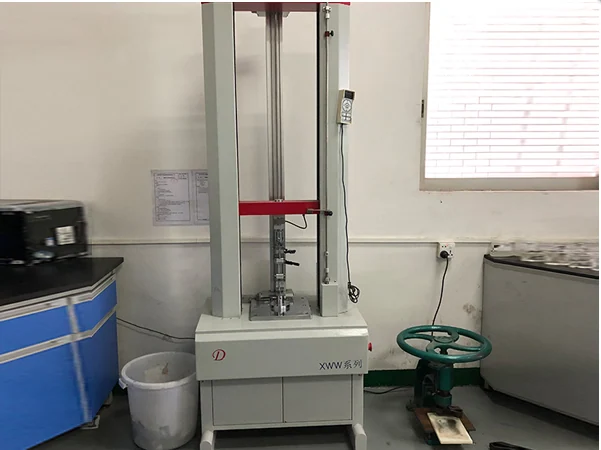
MIRACLE also shows material evaluation equipment, including tensile and impact testing equipment and an environmental chamber. Equipment availability is relevant context for technical discussion, but a photograph cannot specify a test method, accreditation or test scope. Establish who will perform each required assessment and what documentation will be available. If a customer needs an independent laboratory report, that requirement needs separate agreement.
For a first production trial, the converter should preserve enough information to explain how the approved material became the tested product. This includes the actual material combination and the processing description relevant to the evaluation. Our functional masterbatch manufacturing discussion follows that development-to-production relationship in more detail. It is particularly useful when a sample passes one team’s review but another team must reproduce the part.
When a trial does not meet the exposure requirement, preserve the distinction between the material submitted and the product as produced. A changed color addition, unexpected resin substitution or different specimen preparation needs to be visible before the result is attributed to the functional concentrate. That information gives MIRACLE’s development team a specific problem to review instead of an unexplained pass-or-fail message.
Release a UV material order without expanding its technical promise
The final order should describe the accepted material and the application boundary clearly enough for purchasing, production and receiving to act on it. Confirm the grade-specific material information, the agreed packing identification and the shipment arrangement. MIRACLE coordinates packing and shipping; exact pack sizes, quantities and lead times should be settled for the actual order rather than inferred from a general capability statement.
A multinational buyer may run the same design at more than one converting site. If the second site uses a different resin or process, flag that change before treating the earlier approval as transferable. Development can remain efficient without pretending the circumstances are identical. The aim is to carry forward useful evidence while identifying the part of the new decision that still needs review.
The material description should also separate a concentrate recommendation from a finished-product warranty. The outdoor PE and PP application guide helps frame the exposure situation; the engineering file supplies the measurable decision. Bring both to a UV project with MIRACLE: a product that is honestly described, a candidate material prepared for that product and an acceptance decision that says exactly what has been established.