
A Color Masterbatch Supplier in China for Multisite Color Approval

One factory approves a blue component; another approves a blue sample under different conditions. The brand later receives two products that do not look like one collection. For a buyer working with a color masterbatch supplier in China, the solution begins with a shared appearance reference and separate records for the actual materials and processes. MIRACLE offers customizable PE/PP colors, PET-based masterbatch and in-house development, allowing a multisite program to be discussed with a direct manufacturer without assuming every factory can use one unqualified formulation.
The first decision is who owns the approval reference. The second is which resin, product and process that approval represents. Settle those two questions before asking the supplier to reproduce the color across several converters. A common shade name can organize a collection, but it cannot explain the differences between a textured PP part, a PE package and a glossy PET article.
A color masterbatch supplier in China needs one identifiable approval reference
In a multisite program, the purchasing team may be communicating with several factories and a material manufacturer at the same time. If every participant keeps a different sample and calls it the approved standard, even careful formulation work can be judged against inconsistent targets. The problem is not resolved by sending the same color name to more people.
Identify the reference that governs the project and explain its purpose. It might represent the visual intention for a collection or the approved appearance of one specific component. Those roles should be distinguished. A sample of an existing product can communicate a useful direction without automatically defining how every other material in the collection must be processed.
MIRACLE’s custom-color PE/PP range can be discussed against that defined reference. Its development approach considers the finished article, resin and manufacturing process. Give the team the shared visual target together with the information that makes each converter’s job different.
For example, a brand sourcing a colored molded accessory and a separate packaging item can retain one design direction while approving the two products in their own forms. This is an illustrative procurement situation, not a MIRACLE customer story. The important distinction is between a coordinated appearance objective and an assumption of identical formulation suitability.
Brand approval should name the plastic product being judged
The brand owner should identify the actual comparison that matters: adjacent components, a package and its contents, or separate goods sold as a coordinated range. If two pieces will be placed side by side, explain that relationship. A material team cannot infer the importance of a particular visual comparison from a list of generic color descriptions.
Keep the reference identity stable during the review. If the brand changes its preferred sample, communicate the revision before another converter approves the old direction. This gives MIRACLE and the participating factories a common basis for discussing the next material proposal without asking anyone to guess which version is now intended.
Each converter should retain its resin and sample conditions
A PP converter and a PE film producer bring different production contexts to the same color program. Each should identify the actual resin and the form used for evaluation. The manufacturer can then understand which material discussion belongs to which line, rather than receiving several appearance complaints with no explanation of how the samples were prepared.
If a converter changes the resin, part thickness or visible surface, report that change with the feedback. A shared reference is useful precisely because it helps separate the target from the conditions used to approach it. Without the second part of that record, a material adjustment might be requested to compensate for an unreported change elsewhere in the process.
The color manufacturer should receive comparable trial feedback
MIRACLE combines production and in-house development with pilot-scale sample evaluation. A multisite buyer can make that capability more useful by gathering feedback in a form that distinguishes shade, opacity, surface and any separate material-behavior concern. These are observations about different aspects of the finished result, not interchangeable descriptions of a bad color.
A photograph can help explain a difference, particularly when it shows the reference and candidate together, but the parties should agree what counts as the approval basis. A screen image is not automatically equivalent to a retained physical sample or an agreed measurement comparison. The communication method should support the decision rather than silently redefine it.
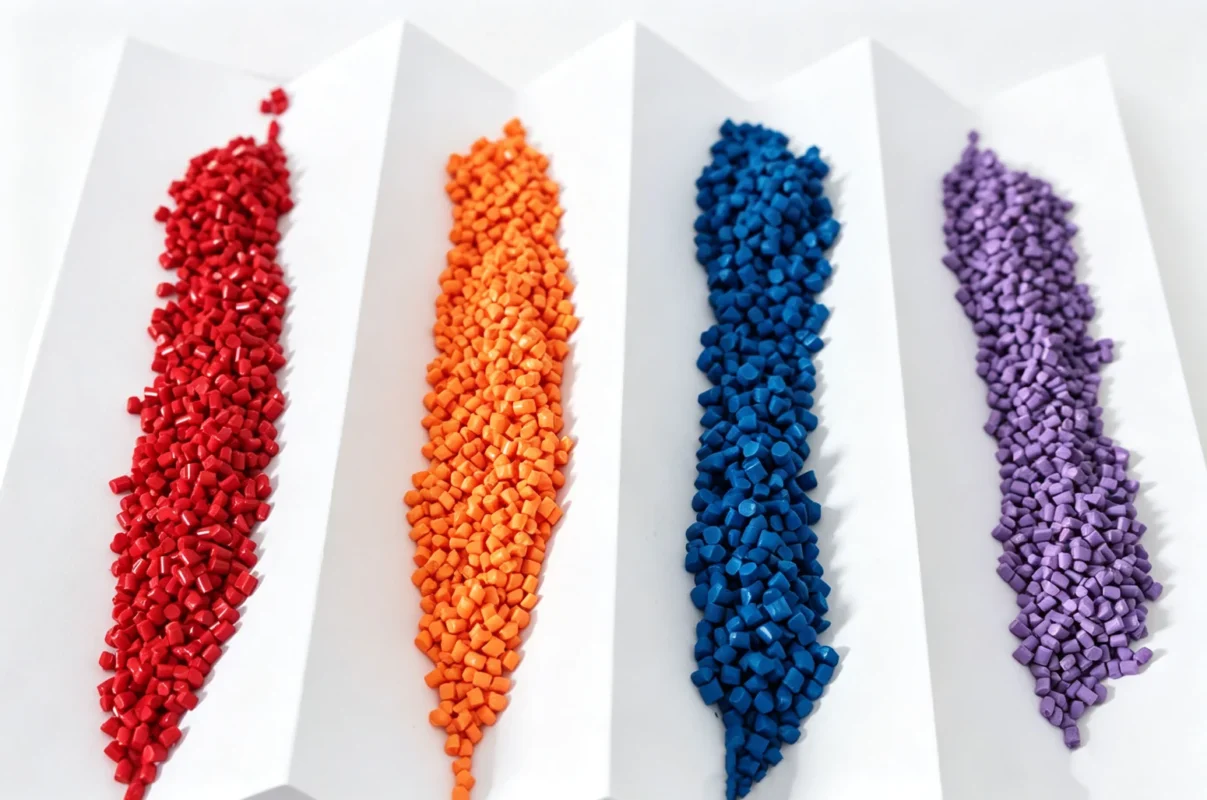
PE, PP and PET color programs can share a design intention without sharing a grade
MIRACLE’s portfolio separates PE/PP coloring from its dedicated PET carrier family. This matters when a buyer wants one visual identity across different polymers. The supplier can discuss the overall appearance objective while keeping the proposed material route tied to each application. That is a stronger sourcing basis than assuming the same pellet must cover all products.
For a PET-based color requirement, retain the intended transparency or opacity and the relevant process information. A glossy PET article should not inherit a PE/PP approval merely because its target hue is similar. The appearance must still be evaluated in the polyester product that the customer will receive.
The same care applies to neutral colors. MIRACLE’s white family lists 20%–80% TiO₂, and its black family lists 18%–50% carbon black across applications. Those portfolio ranges do not establish a common dosage or prove that two different product forms will appear identical.
When an apparently simple white or black program spans several factories, define what the buyer expects to remain consistent. Is it the appearance of adjacent molded parts, a film’s hiding performance or another specific finished-product requirement? The answer helps distinguish a shared commercial color description from a technically meaningful acceptance basis.
Resolve surface differences before requesting another color adjustment
A textured surface can complicate an otherwise straightforward comparison with a smooth reference. In a multisite arrangement, one converter may be sending smooth samples while another evaluates production parts with a more pronounced surface. The manufacturer needs to know about that difference before being asked to make the two samples visually converge.
Consider a buyer reviewing two molded pieces intended to sit together. If their visible textures differ, assess the relevant production surfaces together rather than requiring both to imitate an unrelated smooth sample. This is a design-review situation, not evidence of a particular material defect. The supplier discussion should reflect the way the customer will actually see the finished assembly.
For industry context, Avient’s color-services overview discusses maintaining color standards across a supply chain. The transferable principle is the value of a common reference; its proprietary services or performance promises are not MIRACLE’s own commitments.
MIRACLE’s application-led development gives the buyer a way to connect those surface observations with the material proposal. Explain whether a concern is specific to one component, one resin or one viewing arrangement. That makes the next discussion more precise than requesting a general color correction that may move another approved component in the wrong direction.
Release color decisions without losing the factory-specific context
A useful approval record can be short. It should identify the reference, the product evaluated, the selected material, the production resin and the agreed comparison basis. For a multisite program, add which factory or line the approval covers. The purpose is to preserve a decision, not to create a large generic form that nobody reads.
The approval should also say what remains unresolved. If the color is accepted but a separate processing function still needs review, do not describe the material as fully released for all requirements. MIRACLE’s functional family includes categories such as PPA, UV, antistatic and antiblocking, but those category names do not establish a confirmed combination for every custom shade.
MIRACLE’s manufacturing information describes incoming-material attention, initial examination and sampling during production. Keep the selected material identity connected to the order so those production discussions refer to the same approved route. A broad instruction to supply “the brand blue” should not replace the defined grade and application context.
This is particularly useful when purchasing consolidates quantities for several factories. Commercial coordination may simplify the supplier relationship, but it should not merge distinct material approvals. Keep separate line identities where the carrier, formulation or accepted application differs, even if the goods belong to one brand collection.
| Color-program event | Reference to keep | What should not be inferred |
|---|---|---|
| A brand selects its preferred visual direction | The identified master sample and the products it is intended to coordinate | That every carrier and component has already passed an application trial |
| A PP converter approves a textured component | The actual resin, surface, selected concentrate and evaluated part | That a PE film or PET article shares the same material approval |
| Purchasing combines quantities for different factories | Separate material-line identities and each receiving site’s agreed requirements | That one brand color name makes distinct formulations interchangeable |
| The brand revises its appearance reference | The revision identity and the material approvals affected by that change | That previously released orders automatically reflect the new direction |
A revision should have an explicit boundary. If the brand changes only the appearance target for one PP component, identify that component instead of reopening every material in the collection without a reason. If the shared master reference changes, review which site-specific approvals depend on it. This lets MIRACLE’s development discussion address the actual revision while purchasing maintains a usable distinction between the existing supply and the proposed next version. Identify the applicable revision for each material, especially when participating factories move to the new color at different times.

Use packaging identification to support the multisite color program
MIRACLE allows packaging requirements to be discussed around bag format, pack size, labeling and pallets. In a coordinated color program, that flexibility can help the receiving teams distinguish materials intended for different products or processing sites. Agree the actual arrangement rather than inferring a standard bag configuration from a shipment photograph.
A label should allow the material to be connected back to the order and approved reference. If a brand uses an internal color code, clarify how that code relates to the manufacturer’s material identity. An identical brand color name on every bag may be convenient commercially while still leaving the warehouse unable to distinguish technically different supplies.
For an importer or purchasing center coordinating onward supply, retain the same distinctions when communicating with each converter. A distributor’s relabeling or abbreviated order description should not remove the information that establishes which material belongs to which application. The final receiving instruction needs to remain understandable without access to the entire development email history.
Let the manufacturer relationship support coordination, not replace it
MIRACLE’s combination of customizable colors, carrier-based families, in-house development and international service is well suited to a buyer who needs an organized material conversation across several products. Its strength is the connection between those functions, not an unsupported promise that different polymers and surfaces will all behave as one.
Teams preparing the overseas commercial brief can use the discussion of material identification and export preparation. For an individual product launch, the guide to custom color sourcing for a new colorway keeps the design decision in focus.
Before the next sample is circulated, confirm that every participant can identify the same target and explain its own production conditions. That gives a China-based manufacturer something concrete to develop against and gives the buyer a clearer basis for deciding whether the collection belongs together when the finished products finally meet.