
PE Color Masterbatch Supplier Choices When Film Gauge Changes

A thinner PE film can ask a different color question even when its resin and concentrate references remain unchanged. For a packaging converter working with a PE color masterbatch supplier, the intended film gauge belongs in the appearance brief from the beginning. MIRACLE offers customizable colors within its PE/PP range, supported by in-house development and pilot-scale sample evaluation. Use that direct manufacturing relationship to review the film you intend to sell, not only the sample that was easiest to approve.
The buyer should identify whether the goal is a translucent shade, a more opaque appearance or another defined relationship between color and background visibility. A reduced gauge should be discussed as a changed product condition. It should not be treated as proof that the concentrate has changed or as a reason to prescribe a higher addition level without reviewing the actual result.
Tell the PE color masterbatch supplier which film represents the order
A development sample can show a promising shade while representing a different film thickness from the final production plan. If that difference is known, make it visible before approval. The manufacturer should understand whether the sample is being used to explore a direction or to release a particular finished film requirement.
MIRACLE’s custom color family is described around the target shade, finished appearance, resin and process. The film gauge and form help connect those points. A broad instruction to supply the same blue does not explain whether the customer now expects a thinner article to maintain the earlier hiding impression.
Keep the actual resin and concentrate identities with the film sample. If the converter changes several inputs during a gauge-reduction program, identify them rather than expecting the next observation to explain itself. The material discussion becomes more useful when the buyer can separate the intended design change from the appearance result that needs to be reviewed.
A translucent PE color needs its intended viewing path
For a see-through color, explain how the film will be viewed in use. The appearance of an opened single wall may differ from a folded sample or several layers placed together. Those are different comparison arrangements, not automatically evidence that the proposed material has changed.
Retain the form that represents the customer’s requirement. If the buyer judges the finished bag while the supplier reviews a different film arrangement, the feedback can be difficult to interpret. A shared visual reference and identified product form give MIRACLE a clearer basis for discussing the custom-color proposal.
An opaque PE color needs a background and hiding objective
If the film should conceal what is behind it, describe that requirement separately from the hue. A shade that looks attractive over one background may not answer the customer’s hiding question in another arrangement. The material proposal should be evaluated against the relevant product condition instead of a broad request for a stronger color.
MIRACLE’s white and custom-color families provide neighboring starting points for appearance discussions. Their existence does not establish an unconfirmed combined formulation or a fixed addition recipe. The selected material and actual film need to be reviewed together against the customer’s stated objective.
A changed PE film gauge needs an identified comparison
As a purely illustrative design change, a buyer might move from a 30-micrometre film concept toward a 20-micrometre product. Those numbers are not MIRACLE film specifications or material recommendations. They show why the two samples should be identified as different product conditions before their appearance is compared.
Do not infer a universal dose adjustment from the thickness ratio. The actual color, material formulation and required appearance need an application-specific review. The useful manufacturer discussion begins with what changed and what the finished film still needs to demonstrate, not an assumed arithmetic rule for increasing concentrate.
Use white and black PE/PP ranges to clarify the appearance route
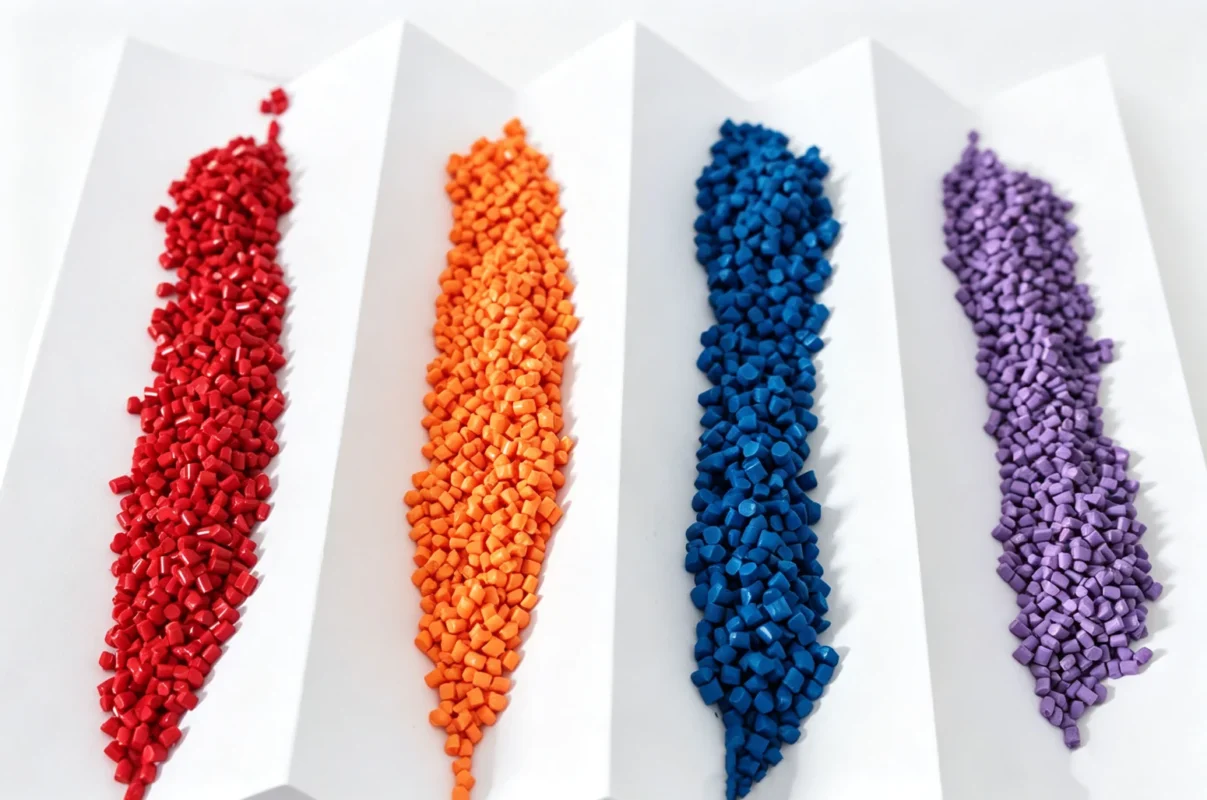
MIRACLE’s white series lists 20%–80% TiO₂ across requirements. This is a concentrate-family range, not the final addition level for the converter’s film. A buyer considering white alongside another shade should describe the desired tone and hiding in the actual film rather than choose solely by pigment content.
The black family similarly lists 18%–50% carbon black. That does not establish equal hiding at every gauge or a universal dose. If a black film is part of the same purchasing program, retain its own selected proposal and evaluation basis rather than assuming that familiar neutral colors need less precise approval.
The portfolio breadth is useful because a converter can discuss several real appearance objectives with one manufacturer. It should help identify the relevant material route, not encourage purchasing to combine every colored, white or black film requirement into one unqualified stock description.
Read the final-mixture addition basis before comparing PE film trials
When a trial note states an addition percentage, identify whether it refers to the final mixture or an amount added on top of base resin. Retain the actual quantities where available. Two reports using the same verbal percentage may otherwise describe different mixtures, complicating the interpretation of the observed shade.
Keep the selected concentrate identity beside that addition information. The customer is evaluating a particular proposed material, not simply a color percentage. A changed concentrate reference, changed resin and changed gauge should not be treated as an unchanged trial just because the dosing system displays a familiar number.
This matters during a packaging redesign because the team may already be comparing several product versions. If the appearance result changes, the manufacturer needs to know which mixture and film condition produced each sample. A clear record can narrow the next question without inventing a cause or a universal formulation correction.
Keep the PE film comparison connected to its surface and use
A packaging film is judged in a product context, not only as a flat laboratory strip. Identify whether the customer is comparing an empty bag, the package in its intended use or another agreed sample arrangement. If the visible background changes, say so before interpreting the appearance as a material inconsistency.
For example, an empty package reviewed over a light surface may not answer every question raised when the film surrounds its intended contents. The buyer should identify the relevant use comparison without claiming that a photograph alone provides a complete color or opacity measurement. The selected appearance basis should remain recognizable to both parties.
MIRACLE’s development approach links the finished article with the resin and processing conditions. Use that capability to bring the packaging design into the conversation early. It is a practical manufacturer advantage when the question concerns the actual result in a product, rather than a catalog shade viewed in isolation.
Discuss film functions without letting them disappear behind color approval
If the PE film also needs a particular function, state it alongside the color and gauge information. MIRACLE’s functional range includes anti-aging, UV, PPA, antistatic and antiblocking categories. Identify the actual objective and confirm what the proposed material covers for the intended application.
A color sample does not automatically release an additional processing or end-use requirement. If purchasing is comparing a combined proposal with separate material discussions, keep those differences explicit. The broad category list is useful for starting a technical exchange, not for claiming that every function has been included in an unspecified custom-color concentrate.
The same boundary applies when a redesigned film will serve a different use. Do not infer regulatory suitability or an outdoor service life from the accepted shade. The applicable grade information and end-product evaluation need to match the actual requirement before the material is represented as released for that purpose.
Use MIRACLE’s pilot and production experience to focus the next film trial
MIRACLE’s company information describes pilot-scale equipment and practical sample evaluation. For a converter changing film gauge, the useful brief identifies the material, resin and appearance question that the next sample should answer. The pilot-development discussion can then remain connected to the product change instead of a vague request for a more intense color.
Describe the observation separately from its possible explanation. If hiding changed after a gauge reduction, record the gauge change. If visible uniformity is the concern, retain a representative sample and relevant processing information. Neither observation should automatically become a diagnosis that the pigment concentration is wrong.
For industry context, Avient’s colorant application discussion connects color matching with polymer properties and finished appearance. Its product technologies and results do not establish a MIRACLE formulation or a prescribed PE film recipe.
Keep the accepted PE film version identifiable when ordering
After a direction is accepted, identify which film version the approval represents. If production is transitioning between old and new gauges, the commercial description should not allow the two requirements to be confused. The selected concentrate reference and accepted sample basis should remain connected to the relevant job.
MIRACLE describes incoming-material attention, initial examination and checks during manufacturing. Carry the material identity into the order so those discussions refer to the proposal the customer evaluated. A broad custom-color name should not replace the specific product requirement that the trial established.
Packaging and labeling can be discussed around order needs. A converter holding several shades or material versions should preserve the agreed identification in receiving and issue-to-production records. Similar pellet color does not establish which material belongs to an older film design and which has been reviewed for the current product.
Distinguish PE film samples before making a gauge-change decision
A short sample description can prevent the customer and manufacturer from interpreting different film arrangements as equivalent evidence. These are illustrative comparison categories, not MIRACLE test results or a required test procedure.
| Film sample being discussed | What it can help the buyer review | What it does not automatically establish |
|---|---|---|
| The original film at its earlier gauge | The accepted appearance and preparation basis of the earlier product | That the reduced-gauge design has already met the same appearance objective |
| The revised film in its intended single-wall form | The actual proposed product condition and the appearance question created by the redesign | A cause for any difference without the material and processing context |
| A folded or multilayer comparison sample | An identified viewing arrangement that may be useful for a particular discussion | The same hiding impression as a different arrangement of the finished package |
MIRACLE’s development exchange can then focus on the intended product instead of debating unidentified samples. Retain the actual film condition with every material observation and use the comparison that represents the customer’s current requirement.
Let the thinner film, not the old sample, decide the next color purchase
MIRACLE’s customizable colors, related neutral families and development support provide a practical starting point for a packaging redesign. The buyer’s contribution is a clear account of the film that will actually be manufactured and the appearance it needs to retain. That makes the material discussion more useful than asking the manufacturer to repeat a reference whose product conditions have changed.
The wider PE material-family guide keeps the film choice separate from other polyethylene jobs. The discussion of finished-article color approval provides another perspective on why the product form belongs in the first brief.
When the film gauge changes, preserve what the earlier trial actually taught you and identify what the new product still needs to demonstrate. The most useful PE color proposal is the selected material that can be evaluated against that current requirement, not a concentration adjustment guessed from thickness alone.