
Blog
When to Bring a TPV Compound Supplier into a Flexible-Component Review


When a component drawing already names TPV, preserve that requirement before comparing supply. When the old flexible part has no reliable material reference, begin with what the part does rather than declare it TPV from its appearance. A TPV compound supplier should understand which of these two situations the buyer faces. MIRACLE lists TPV alongside TPE, SBS-based TPE and TPU, supported by manufacturing and in-house development. Bring the existing material information, actual construction and operating requirement so the discussion can address a defined replacement or a genuinely open material review.
Those starting points lead to different questions for an engineer, converter or distributor. One needs the proposed TPV supply connected to an existing requirement. The other needs an application-led evaluation without pretending the unidentified old material is a known formulation. Both benefit from a clearer brief before a sample is treated as a replacement candidate.
Tell the TPV compound supplier whether the material basis is known or still open
MIRACLE’s flexible-material brief considers the part design, desired feel, hardness and performance targets where available, and processing needs. For a replacement review, include the current material specification if it exists. If it does not, make the information gap visible instead of fill it with an unsupported family label.
Imagine a converter receiving a component drawing that expressly requires TPV but gives only a broad informal description in the purchasing file. The first task is to preserve the engineering requirement and establish the selected-material information. It is not to order whichever flexible granules resemble an old sample.
Now consider a distributor holding an old flexible component whose material history is uncertain. The part may be useful for describing geometry and intended function, but its appearance is not a chemical identification. These are hypothetical buyer situations, not accounts of MIRACLE customer projects.
If the customer has several old references, identify whether they belong to the same component version and material history. A distributor should not combine a drawing from one version with a sample from another without saying so. MIRACLE needs to understand what each reference represents before discussing a proposed TPV replacement for the actual current requirement.
| Starting situation | Information to retain | Decision still required |
|---|---|---|
| Drawing explicitly requires TPV | The actual material requirement, component reference and available assessment information | Whether the proposed TPV meets the defined basis for that component |
| Old flexible material is unknown | The uncertainty, useful reference part, operating job and relevant construction | Which proposed route should be evaluated, without claiming identity with the old compound |
| Buyer wants to consider another flexible family | The reason for the proposed change and the requirement that remains in force | Whether the alternative has an acceptable application basis and release scope |
A TPV name on a drawing is not an interchangeable TPE purchasing label
TPV belongs within the thermoplastic-elastomer field, but the broad TPE term does not identify one equivalent compound. Keep the more specific material requirement in the supplier conversation. A commercial summary should not erase it simply because the workshop calls every flexible part rubber.
The flexible-family explanation helps align the vocabulary. For this replacement decision, the important consequence is that a TPV requirement remains recognizable through the proposed material, the technical review and the order.
Understand what the TPV family description does and does not establish
TPV means thermoplastic vulcanizate. In general, this route combines a thermoplastic phase with a dynamically vulcanized rubber phase. HEXPOL’s TPV explanation describes the commonly discussed PP/EPDM system. This is a class explanation, not disclosure of a particular MIRACLE compound’s composition or property values.
The family name helps make the material conversation more precise. It does not provide a universal hardness, chemical-resistance, temperature or compression-set rating. Confirm what information is available for the proposed material and what the actual component needs to demonstrate.
Dynamic vulcanization describes the TPV route, not a workshop setting to copy
The concept concerns how the material system is produced. It should not be turned into an instruction for the customer’s molding or extrusion setup. For the proposed supply, obtain the applicable processing information and discuss the intended component-manufacturing route.
A general TPV guide can help a buyer understand the terminology, but its numerical recommendations and specific branded grades belong to their own context. MIRACLE’s listed TPV route is a starting point for a material discussion, not permission to apply another manufacturer’s data sheet to an unidentified compound.
Nor does an application photograph prove a sealing or service-life result. If the replacement has a sealing, repeated-motion or exposure requirement, identify the actual condition and acceptance question. Our portfolio introduction does not declare a validated TPV grade for every application that appears in an industry overview.
Use the old component to describe the job without inventing its original material
A reference part can help explain shape, contact areas, movement and the way the component is supported. It may also reveal which feature matters to the buyer’s replacement decision. MIRACLE’s application-led development can use that context alongside a drawing and the intended process.
For the distributor’s unknown old component, distinguish an observed condition from a required new result. A worn, hardened or damaged reference should not automatically become the desired feel of the replacement. Explain what remains useful as a reference and what the new component is expected to do differently.
For example, the old part’s locating geometry may be useful while its contact surface is no longer representative of the desired product. Keep those roles distinct in the brief. The development team can discuss the intended material behavior without being asked to reproduce an aged condition that the buyer actually wants to improve.
The aged TPV reference and the desired replacement are not necessarily the same target
If the original material is known to be TPV, its present condition still may not represent its initial state. Preserve available original requirements and useful service information rather than judge the new candidate only by matching an old part’s current hand feel. If the material is unknown, do not insert TPV into that history as a fact.
Describe the history only to the extent it is known. A buyer may know the part’s assembly and operating location but not its full exposure or previous maintenance. Retain that uncertainty rather than turn an estimate into a validated service-life claim. The proposed material should be evaluated against the requirement the customer can define, not a reconstructed history presented with false precision.
Describe the relevant working state. Does the part move, remain constrained, contact another surface or face a defined exposure? Those questions should be specific to the actual component. A family description cannot replace the engineering requirement, and a pleasant first squeeze cannot establish behavior over the stated use.
The comparison of contact and sustained-deformation requirements gives context for those different property questions. In a replacement project, use that distinction to define the new candidate’s task instead of assume the old part’s appearance answers it.
If the component belongs to an automotive or other controlled program, provide the actual customer requirements. MIRACLE’s broad component application discussion is not an OEM approval. Keep any required document and assessment scope attached to the proposed TPV supply rather than inherit it from an unrelated old material.
Compare a TPV candidate with other MIRACLE routes only against a defined reason
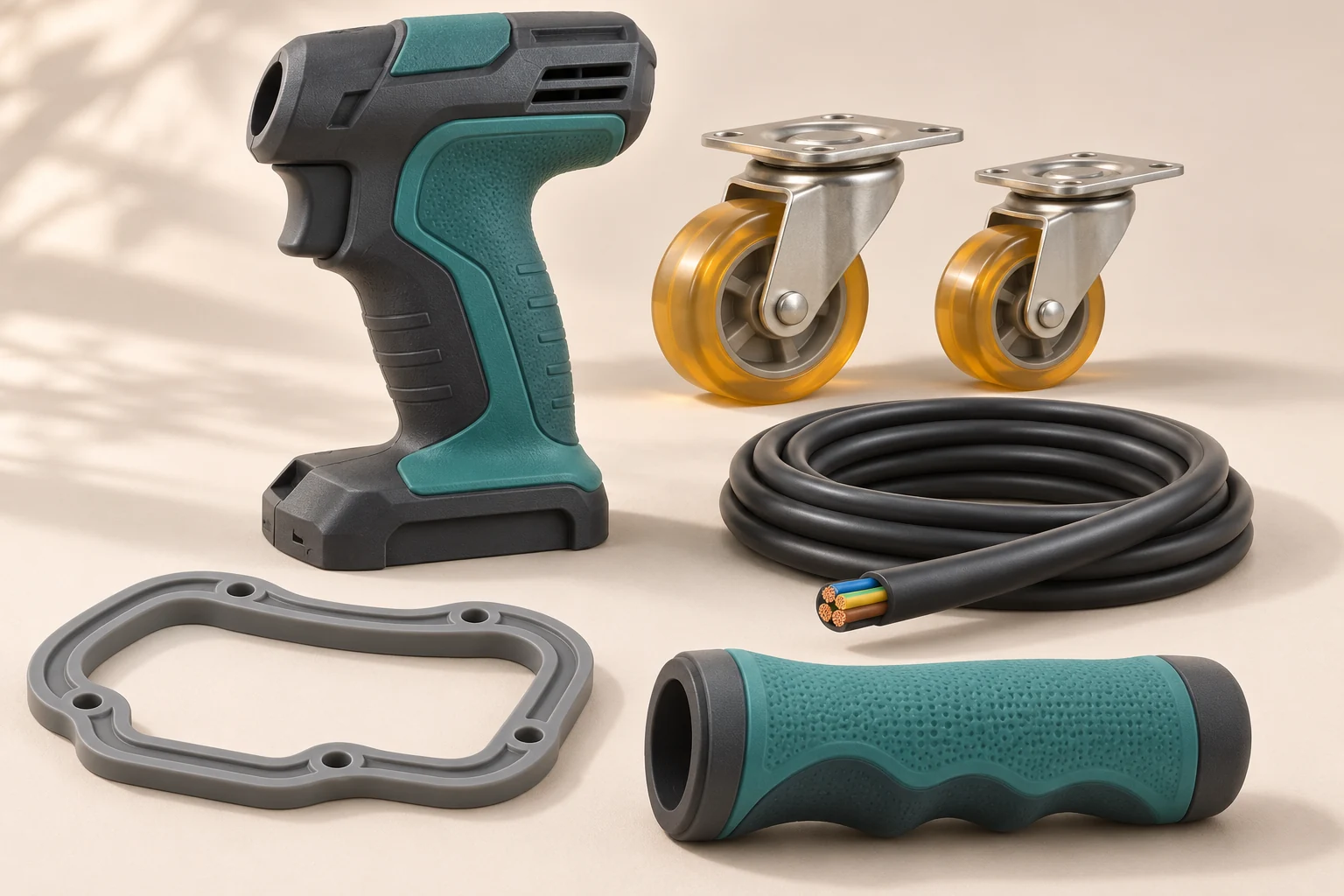
MIRACLE’s TPE, SBS-based TPE and TPU routes provide other starting points where the material choice is genuinely open. The advantage of a connected flexible portfolio is a broader technical conversation, not a claim that the same component can accept every family without review.
For the drawing-controlled TPV request, an alternative should be identified explicitly and reviewed by the responsible parties. For the unknown-material request, a proposed TPV can be assessed as a candidate without being represented as the original compound. Keep those two decisions separate even if they use similar sample parts.
A buyer should not select TPU merely because a general chart emphasizes wear, or select a styrenic route merely because the first sample feels soft. The actual proposed compound needs to address the part’s requirement. The family name is informative but does not replace the selected-material evidence.
If two candidates use different part constructions, explain that difference before comparing them as materials. A trial made in a simplified geometry can be useful for a defined question, but it may not reproduce the actual replacement fit. The purchaser should know whether the comparison concerns a material specimen, a preliminary component or the intended finished construction.
Color and other additions should remain visible in that comparison. MIRACLE also manufactures masterbatches, but a PE/PP or PET concentrate is not automatically suitable for a TPV candidate. If the replacement has an appearance or functional requirement, discuss the relevant combination rather than add material from another project by habit.
Hardness and tensile evidence should describe the actual TPV candidate under review
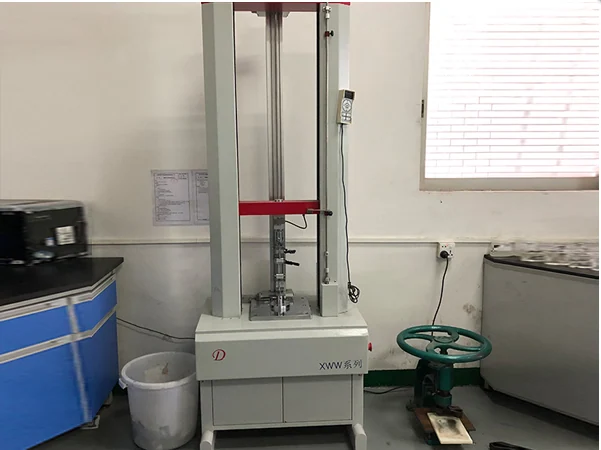
Our material preparation and evaluation facilities include hardness and tensile equipment. Confirm the available assessment for the proposed material and retain the specimen, method and relevant conditions. A result for an earlier TPE or TPU candidate should not be used as TPV evidence because it appears in the same project file.
If the replacement requires another specific assessment, identify it and agree how it will be addressed. Our published equipment information does not establish every test capability. The material discussion should keep the actual missing question visible rather than complete the review with an unrelated favorable result.
When a candidate is rejected, preserve the reason at the same level of detail. A fit issue, a surface concern and an unmet material-property requirement are not equivalent findings. Specific feedback lets MIRACLE review the relevant TPV question without discarding useful information from a different part of the replacement evaluation.
Order the TPV for the replacement decision that has actually been made
Define whether the next supply supports an exploratory review, a particular unresolved assessment or an accepted production material. MIRACLE’s manufacturing and supply conversation can then connect the material description with the actual quantity, destination and packing requirement.
Our incoming checks, initial examination, interval sampling and self and peer cross-checks support attention during manufacture. For the TPV replacement, keep the accepted candidate and component reference recognizable in the order. A broad instruction to send the same flexible material is not enough where several alternatives remain at the converter.
The component development discussion explains how preparation and evaluation support an identifiable material decision. For this replacement, preserve which information relates to the old part and which evidence relates to the new candidate. They should not merge into a history that was never established.
Confirm applicable documents and actual commercial arrangements before the supply is released. A family listing does not establish stock, minimum quantities, fixed packaging or dispatch timing. Those details should follow the selected TPV requirement rather than an assumption made from an industry catalogue.
Bring TPV into the review when the drawing requires it or when its proposed route deserves evaluation against the component’s actual job. Keep an unknown old material unknown until there is a sound basis to say more. That lets MIRACLE’s flexible-material development address a replacement requirement honestly, while the buyer chooses a new supply for what it must do rather than for an unsupported claim about what the old part was.